
China is the world’s largest manufacturer of material handling equipment, producing electric forklifts, pallet trucks, stackers, mini dumpers and three-wheeled handling trucks at competitive prices with extensive customization. For overseas distributors, contractors and fleet operators, sourcing directly from a Chinese factory can significantly reduce equipment cost — but only if the process is managed carefully. This guide walks through every step.
Step 1: Define Your Requirements First
Before contacting any supplier, prepare a specification sheet:
- Product type and model (e.g., 2-ton electric pallet truck, lithium battery)
- Capacity, lift height and fork dimensions
- Quantity (trial order vs. full container)
- Certifications required for your market (CE for the EU, ANSI/UL for the US, etc.)
- Branding and packaging needs (OEM/ODM)
- Delivery timeline and destination port
A detailed spec sheet lets factories quote accurately and signals that you are a serious buyer.
Step 2: Choose a Direct Manufacturer, Not a Trading Company
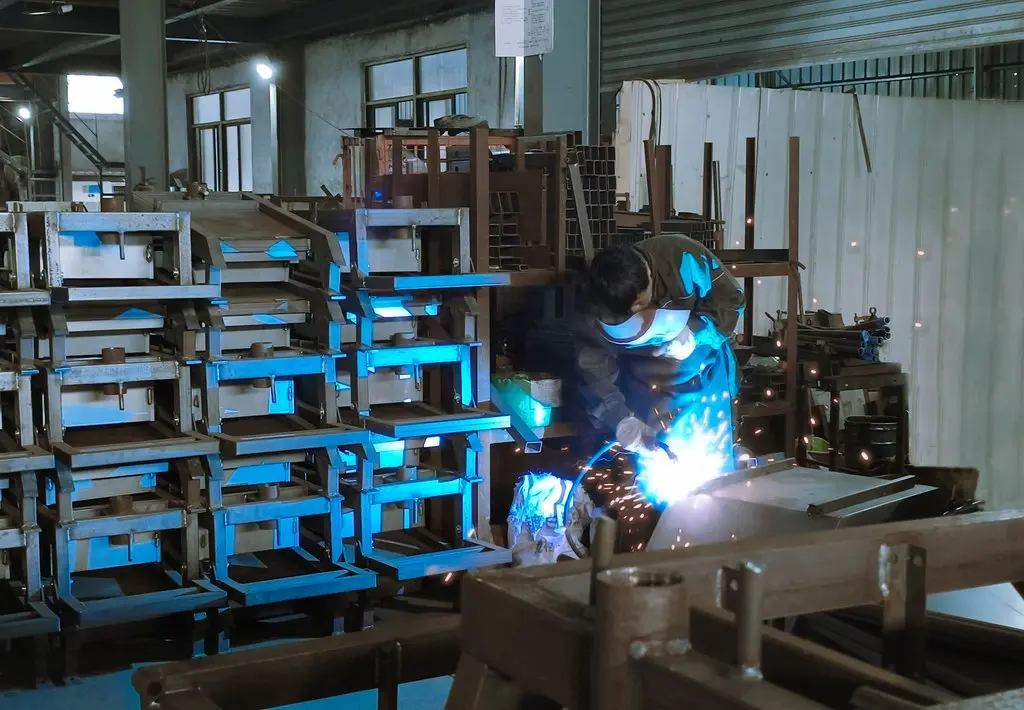
- Direct manufacturer — lower price, direct access to engineering, easier customization and stronger after-sales. Verify actual production capacity before ordering.
- Trading company — convenient for consolidating multiple products, but adds a markup and usually provides weaker technical support.
Look for factories with their own R&D, registered patents, export experience and a verifiable factory address. Shenggong Machinery, for example, is a direct manufacturer founded in 2018, with 100+ patented designs and exports to 30+ countries.
Step 3: Verify the Factory
Never rely on website photos alone. Request:
- Business license and export records
- Factory audit report or live video tour
- Certifications (ISO, CE and relevant product standards)
- Customer references in your region
- Confirmed production capacity and lead time
For significant orders, schedule an on-site visit or a third-party factory audit.
Step 4: Evaluate OEM/ODM Capability
Most overseas buyers need some level of customization. A capable factory can adjust:
- Appearance — colors, decals and branding
- Function — control interfaces, safety features and attachments
- Parameters — capacity, voltage, fork length and lift height
- Packaging — export packaging and product manuals in your language
Confirm whether the factory accepts small-batch customization and who owns any custom tooling or molds.

Step 5: Quotation, MOQ and Payment Terms
- Compare at least three to five quotes. The lowest price often hides cost-cutting on motors, batteries or steel.
- Clarify MOQ — many factories accept trial orders of 1–5 units at a slightly higher unit price.
- Standard payment terms are 30% T/T deposit with the 70% balance before shipment; larger orders may use an L/C.
- Confirm the Incoterm (FOB, CIF or DDP) and exactly what the quoted price includes.

Step 6: Shipping and Logistics
A factory located near a major port — such as Fujian or Guangdong — shortens inland transport and reduces handling damage. Confirm:
- Container loading plan and total volume
- Shipping term and insurance coverage
- Expected transit time to your port
- Customs documentation (commercial invoice, packing list, bill of lading, certificate of origin)
- Local import duties and compliance, checked before the goods ship
Step 7: After-Sales and Spare Parts
The cheapest quote is worthless without support. Before ordering, confirm:
- Warranty period and what it covers
- Spare parts pricing and availability
- Technical documentation and manuals
- Response time for technical issues
- Whether the factory ships replacement parts internationally
Common Pitfalls to Avoid
- Chasing the lowest price — it usually means cheaper motors, smaller batteries or thinner steel.
- Buying through a trading company without identifying the actual factory.
- Ignoring certification for your market — non-compliant goods may be seized at customs.
- Skipping pre-shipment inspection.
- Comparing quotes on unit price alone — always calculate total landed cost including freight, duties and insurance.
First-Order Checklist
- Specification sheet finalized
- Three or more factory quotes compared
- Factory verified (license, audit, references)
- Market certifications confirmed
- OEM/ODM details confirmed in writing
- Payment terms and Incoterms clear
- Inspection scheduled before balance payment
- Spare parts and warranty confirmed
- Shipping and customs documents arranged
Frequently Asked Questions
Q: What is the typical MOQ for Chinese material handling equipment? A: Many factories accept 1–5 units for a trial order. Full-container orders receive the best unit pricing.
Q: How long is production lead time? A: Standard models often ship within 15–30 days. Customized OEM orders typically take 30–60 days.
Q: Can I sell the equipment under my own brand? A: Yes — most factories offer OEM branding, colors and packaging. Confirm tooling costs and minimum quantities in advance.
Q: What is the safest way to pay? A: Use T/T to a verified bank account held in the factory’s registered name, or an L/C for large orders. Avoid untraceable payment methods.
Q: What happens if equipment fails after delivery? A: A reputable factory provides spare parts and remote technical support under warranty. Confirm these terms in writing before placing your order.
Conclusion
Sourcing material handling equipment from China is straightforward when you follow a structured process: define your specs, verify the factory, negotiate clear terms, inspect before shipment and plan logistics carefully. Working with a direct manufacturer — rather than an intermediary — gives you better pricing, direct engineering access and stronger long-term support.
Shenggong Machinery is a direct manufacturer of electric forklifts, electric pallet trucks, electric stackers, three-wheeled handling trucks, electric mini dumpers and concrete machinery, with full OEM/ODM customization and exports to 30+ countries. Contact our export team for a quotation and a live factory video tour.