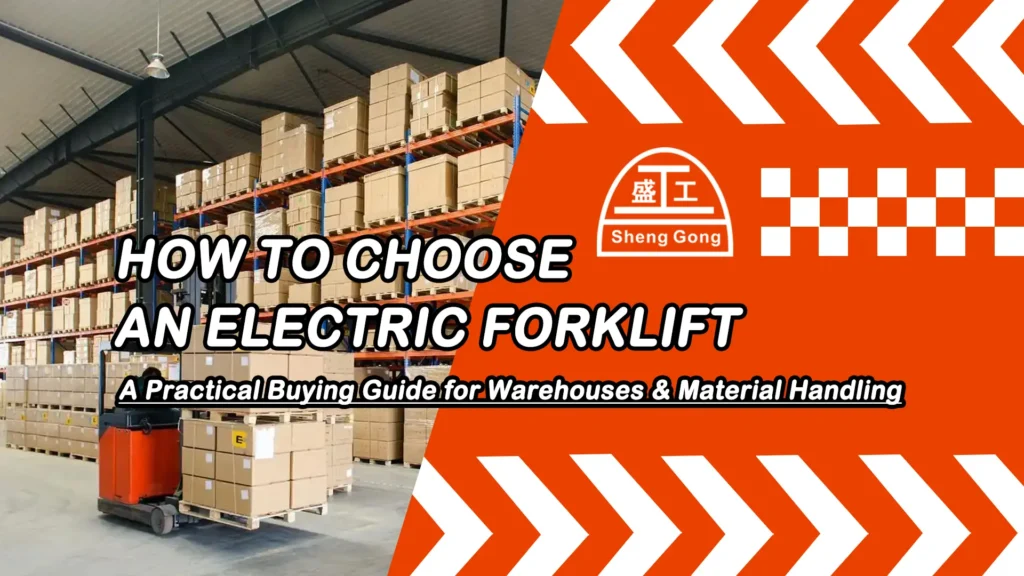

Choosing the right forklift is an important decision for warehouses, factories, logistics companies and material handling operations.
An electric forklift can be an effective option for businesses that need reliable equipment for lifting and transporting palletized goods while working in indoor or controlled environments.
But how do you choose the right electric forklift?

What Is an Electric Forklift?
An electric forklift is a battery-powered industrial vehicle designed to lift, transport and stack materials.
Unlike internal combustion forklifts, electric forklifts use an electric motor and battery system.
Modern electric forklifts can support applications such as:
Warehouse material handling
Factory logistics
Pallet transportation
Goods loading and unloading
Manufacturing facilities
Distribution centers
Shenggong’s electric forklift range includes different configurations designed for material handling applications.

1. Consider the Required Load Capacity
Load capacity is one of the first specifications buyers should evaluate.
If your warehouse regularly handles 1,000 kg pallets, for example, the selected forklift should have an appropriate rated capacity and safety margin.
Do not select equipment based only on the average load.
Consider the heaviest products that the forklift will regularly handle.

2. Check the Required Lifting Height
The lifting height is particularly important for warehouses using multi-level storage systems.
Before purchasing, determine:
Maximum rack height
Required lifting height
Warehouse ceiling height
Pallet dimensions
Storage layout
A forklift with sufficient load capacity may still be unsuitable if it cannot safely reach the required storage level.
3. Consider Warehouse Space
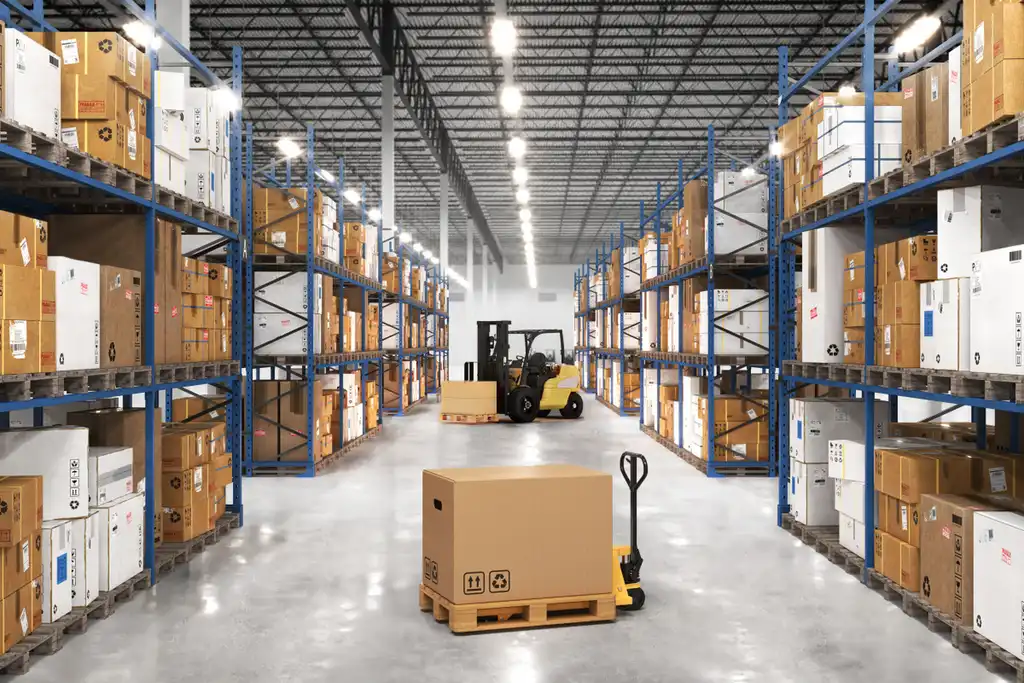
Warehouse aisles can vary significantly in width.
A forklift that works well in a large distribution center may not be suitable for a compact warehouse.
Measure:
Aisle width
Turning radius
Door width
Loading area
Storage layout
Compact electric forklift configurations can be advantageous when operating space is limited.

4. Battery and Charging Requirements
Battery performance is another important factor.
Buyers should consider:
Daily operating hours
Charging time
Charging location
Battery capacity
Battery replacement requirements
Number of shifts
For multi-shift operations, charging strategy becomes especially important.
Businesses should plan charging schedules to minimize equipment downtime.
5. Indoor vs. Outdoor Applications
Electric forklifts are commonly associated with indoor material handling.
They can be useful in warehouses and factories where lower noise and the absence of direct exhaust emissions during operation are important considerations.
However, if the equipment needs to operate outdoors, buyers should evaluate the terrain, surface conditions, weather exposure and tire configuration.
6. Operator Requirements
An ergonomic operating environment can influence productivity.
Consider:
Operator visibility
Controls
Seating or standing configuration
Steering system
Safety features
Ease of operation
A forklift should not only meet technical requirements but also be practical for the people operating it every day.

7. Supplier Support
The equipment supplier is also an important part of the purchasing decision.
For international buyers, evaluate:
Product documentation
Spare parts availability
Technical support
Warranty policy
Shipping support
OEM requirements
After-sales communication
A reliable supplier can make equipment ownership easier over the long term.

Electric Forklift Buying Checklist
Before requesting a quotation, prepare the following information:
Load capacity: What is the maximum load?
Lifting height: How high must the forklift lift?
Working environment: Indoor, outdoor or mixed?
Aisle width: What is the narrowest operating area?
Working schedule: How many hours or shifts per day?
Battery: What charging infrastructure is available?
Application: Warehouse, factory, logistics or manufacturing?
The more detailed the information provided to the supplier, the easier it is to recommend a suitable configuration.
Conclusion
Selecting an electric forklift should be based on the complete working environment rather than a single specification.
Load capacity, lifting height, aisle width, battery requirements, operating hours and application conditions should all be considered together.For warehouses and manufacturing facilities looking to improve material handling efficiency, an appropriately configured electric forklift can be an important part of a modern material handling system.